YOUR WINDOW TO THE NIGHT SKY
Is tonight a good night
to look up?
Clouds, moonlight and darkness — distilled into one practical stargazing forecast.
TONIGHT
Your sky
The score combines forecast sky conditions with a Moon-phase proxy after astronomical dusk. Moonrise, local light pollution and site access are not scored.
Lower is better
Surface visibility
HOURLY OBSERVING PLAN
Find tonight’s clearest window
NEXT 7 NIGHTS
Choose a better night to observe
The first three nights include hourly detail. Days 4–7 are more likely to change, so check again before travelling.
ATMOSPHERE, LAYER BY LAYER
Professional observing conditions
Forecast values, not guarantees. Smoke is a particulate/aerosol risk estimate; seeing is supplied by an astronomical model.
Near-surface layer
Middle atmosphere
Thin cloud can spread skyglow
PM2.5 + aerosol optical depth
Optics dew risk
7Timer ASTRO model
Not sure? Leave this unset. Choose 1–3 for a remote dark site, 4–6 for suburban/rural edges, or 7–9 for a bright city location.
Darker skyBrighter city sky
Weather and air-quality fields: Open‑Meteo · Seeing: 7Timer ASTRO · Light pollution: your site setting (stored only in this browser)
CHOOSING AN OBSERVING SITE
Find a practical place near this city
For cities without a human-reviewed list, use these checks instead of trusting an automatically generated place name.
- Choose a legal, open site with a wide view of the sky.
- Move away from direct streetlights and face away from the city centre.
- Confirm closing times, parking or transit, and nighttime access before leaving.
- Go somewhere familiar, tell someone your plan, and recheck weather and local safety conditions.
Forecast data: Open-Meteo. Conditions can change; check again before heading out.
WHAT THE CHECKER RETURNS
A transparent forecast walkthrough
Before entering a city, you can see how the tool interprets its inputs. This example is intentionally hypothetical and is not tonight’s forecast for any location.
Fewer opaque clouds generally improve the opportunity.
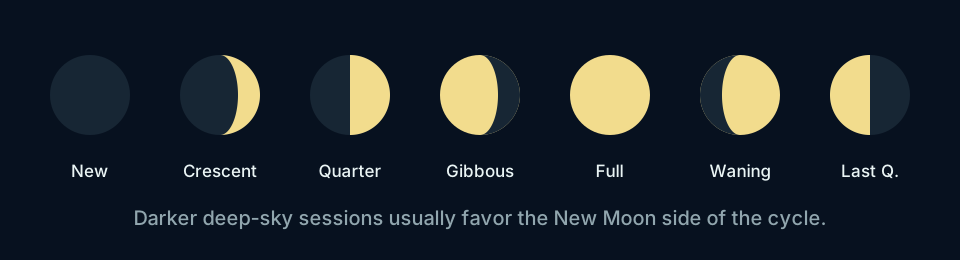
Fainter targets benefit when lunar illumination is lower.
Astronomical darkness depends on date and latitude.
Recheck live weather, local lights and safety before leaving.
Live results use Open-Meteo forecast fields plus local twilight and Moon-phase calculations. Read the methodology.
SIMPLE SCIENCE, USEFUL ANSWERS
Three things decide your view
Darkness
Astronomical twilight and local sunset tell us when the sky truly gets dark.
Clarity
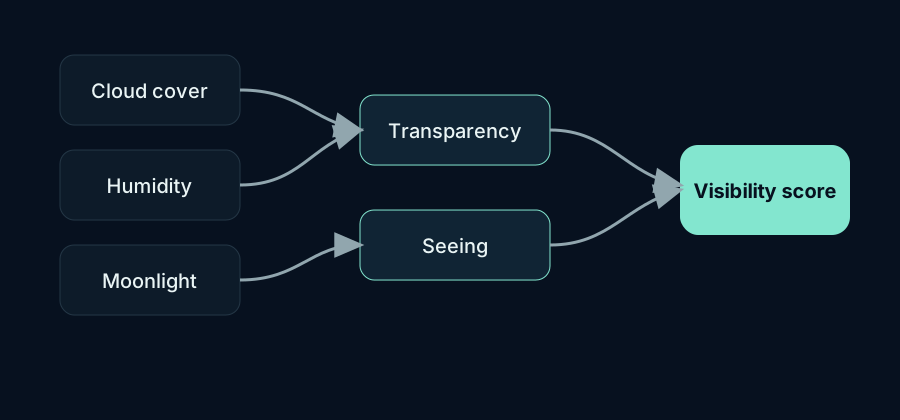
Cloud cover and visibility determine how much of the sky reaches your eyes.
Moonlight
A bright Moon is beautiful, but it can wash out faint stars and galaxies.
LEARN THE SKY
Field guides for curious nights
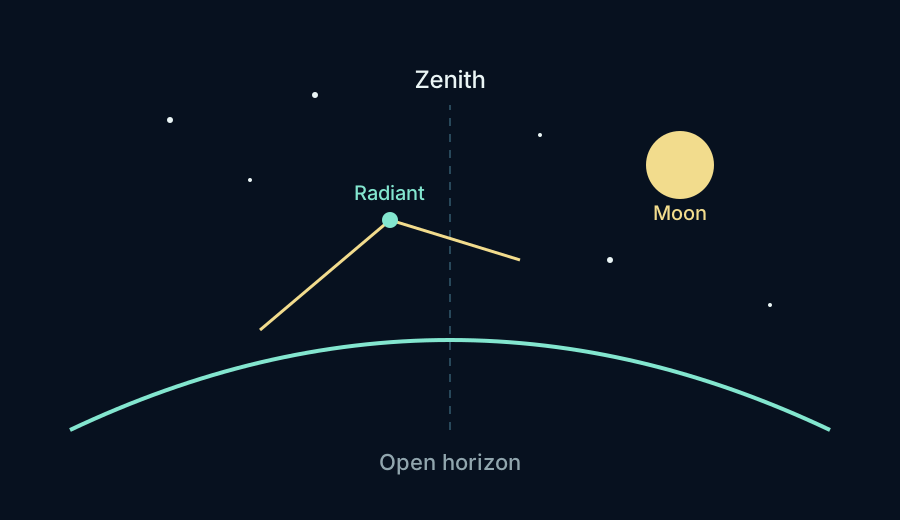
Meteor shower calendar
Verified timing, regional visibility and planning advice.
Open calendar → ◐MOON GUIDEMoon phases for stargazing
Match moonlight and rise times to your target.
Read guide → ✦FORECAST GUIDERead a stargazing forecast
Clouds, transparency, seeing and darkness explained.
Read guide → ☄EVENT GUIDE2026 Perseid meteor shower
Plan around the peak window, Moon conditions and northern-sky visibility.
Read guide → ☄EVENT GUIDE2026 Geminid meteor shower
Plan around the broad peak, Moon conditions and cold-weather observing.
Read guide → ☄EVENT GUIDE2026 Orionid meteor shower
Plan around the peak date, moonlight and the clearest viewing window.
Read guide → ●2026 CALENDARFull Moon calendar
Plan lunar and dark-sky observing sessions.
Read guide → ✦MILKY WAYBest time to see the Milky Way
Combine season, latitude, darkness and Moon.
Read guide → ◉DARK SKYLight pollution guide
Reduce glare and choose a safer observing site.
Read guide → ◎VISIBILITYStargazing visibility guide
Match conditions to planets, meteors and deep sky.
Read guide →